Prostate enlargement is a condition that is particularly common in men over 50 and negatively impacts quality of life. It causes bladder outlet obstruction, leading to urinary symptoms. The most common symptoms include weak urine flow, intermittent urination, incomplete urination, and frequent urination.
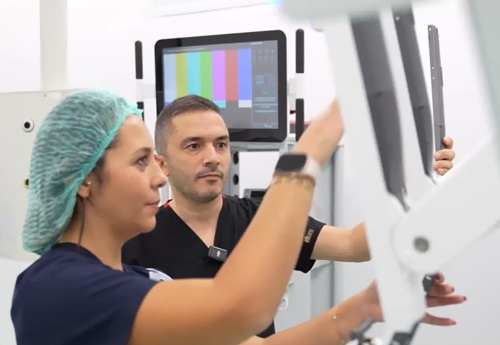
As with other conditions, treatment for benign prostatic hyperplasia is determined on a case-by-case basis. However, when considered step by step, lifestyle changes and alpha-blockers, 5-alpha-reductase inhibitors, and PDE-5 inhibitors are beneficial in improving symptoms in patients with mild to moderate symptoms of prostate enlargement.
However, in cases of symptoms that do not respond to medical treatment and impair quality of life, formation of bladder stones, recurrent urinary tract infections, development of acute urinary retention, renal failure due to obstruction by the prostate, and persistent urinary bleeding, the standard treatment for prostate enlargement is surgery.
Today, endoscopic surgery is the most commonly used method for prostate surgery. These methods are listed below:
High volume prostate enlargement surgeries, particularly with laser enucleation techniques (HoLEP, ThuLEP, ThuFLEP),are now easily performed with endoscopic methods. However, endoscopic surgeries can be complicated, especially for prostates larger than 300 cc, and excellent results can be achieved with open prostatectomy and robotic prostatectomy.
Of course, robotic simple prostatectomy is preferred in centers where robotic surgery is available, as it offers less bleeding and a faster recovery. Robotic surgery can also yield good results in cases of prostate enlargement accompanied by bladder stones and smaller prostate volumes. This prevents the urethra from being affected by the trauma caused by endoscopic procedures.
Robotic simple prostatectomy is the name given in the literature to a surgery performed on patients with benign prostatic hyperplasia (BPH) but not prostate cancer. It is also called robotic prostate enucleation which removes the enlarged prostate adenoma. Robotic radical prostatectomy is a surgical procedure that removes the prostate completely, including its capsule, and even removes the seminal vesicles and ductus deferens, with an anastomosis between the urethra and bladder. It is used to treat prostate cancer.
Robotic simple prostatectomy surgery takes approximately 2 hours. Recovery from anesthesia may increase this time slightly.
Robotic simple prostatectomy is a minimally invasive procedure, and bleeding and clot-related obstruction are less common than open prostatectomy. Wound infection rates are lower. Urinary tract infections generally resolve quickly. Persistent incontinence and erectile dysfunction rates are low (1%). Retrograde ejaculation may occur. Urethral strictures are less common than HoLEP and TUR-P procedures.
Robotic simple prostatectomy is not a major surgery and is performed safely in experienced centers. It is less invasive than the alternative, open prostatectomy. It is more invasive than HoLEP surgery, but because the urethra is not entered, the rate of urethral stricture is lower.
Robotic simple prostatectomy has a faster recovery time than open prostatectomy. The average urethral catheter stay is 6-7 days. The drainage catheter is usually removed after two days. Because blood loss and pain are less than with open prostatectomy, a return to social life is also possible sooner.
HoLEP
Robotic simple prostatectomy
TURP
Robotic simple prostatectomy
Robotic simple enucleation prostatectomy (enlarged prostate surgery) costs vary depending on country, hospital conditions, insurance coverage, and surgeon experience. In Türkiye, the average cost of robotic simple prostatectomy is $8,000.
For more information, please contact us via WhatsApp at +905324850016.
Robotic simple prostatectomy surgery, which is used for benign prostatic enlargement and is particularly preferred for the enucleation of high-volume prostate adenomas, is performed in Türkiye by Prof. Dr. Arif Demirbaş.
For more information, please contact us via WhatsApp at +905324850016.
 Prof. Dr. Arif DemirbasUrology Specialist


 Prof. Dr. Arif Demirbaş
 Contact Us
- I will definitely recommend this hospital in the future.
- I cannot recommend Dr. Arif Demirbaş enough.
- God continue to bless you in all your good work.
All TestimonialsMeet Alpha from Sierra Leone who just undergone a PCNL and Utereoscopy surgeries at the Doruk hospital in Bursa. I want to start by sending a massive thank you to Dr Arif for exhibiting such a {...}
24.01.2025I cannot recommend Dr. Arif Demirbaş enough. My father had been living with a catheter for over two years due to benign prostatic hyperplasia, which also caused bladder stones and an inguinal h{...}
24.01.2025Thanks to you Dr Arif for your successful kidney stone surgery on my Son Ryan since after we came back from Turkey to date Alhamdulillah Ryan is very ok Alhamdulillah bravo for your Good work. {...}
24.01.2025